Group objections by the risk the buyer sees
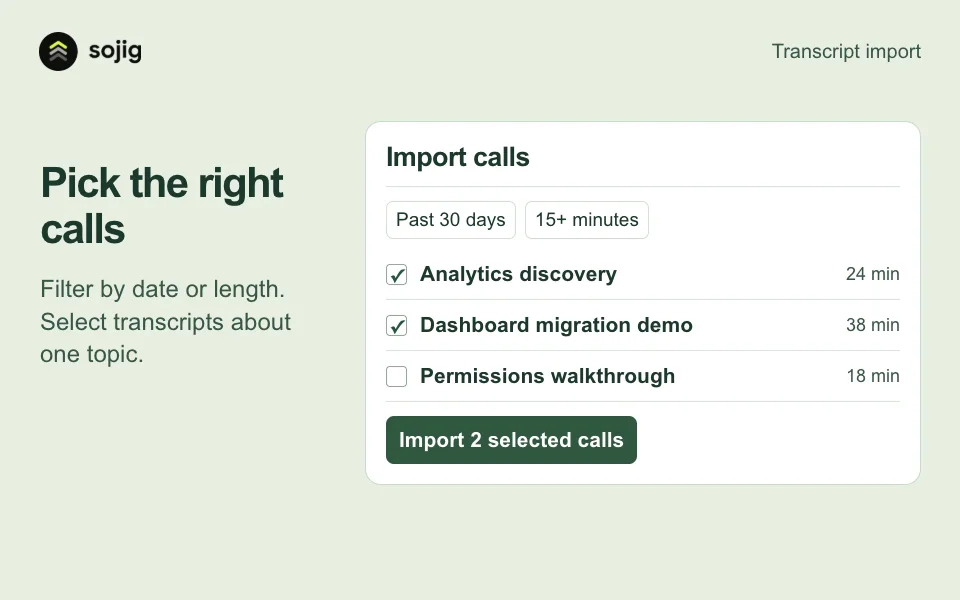
Scan discovery calls for repeated buyer questions, then group them by the decision they are trying to make. “How long does setup take?” and “Who has to join the kickoff?” might both signal concern about implementation effort. Create content that helps the reader evaluate that effort.
Keep exact wording as internal evidence and capture the objection’s context. A late-stage security reviewer and a founder on a first demo may use the same words with different expectations.
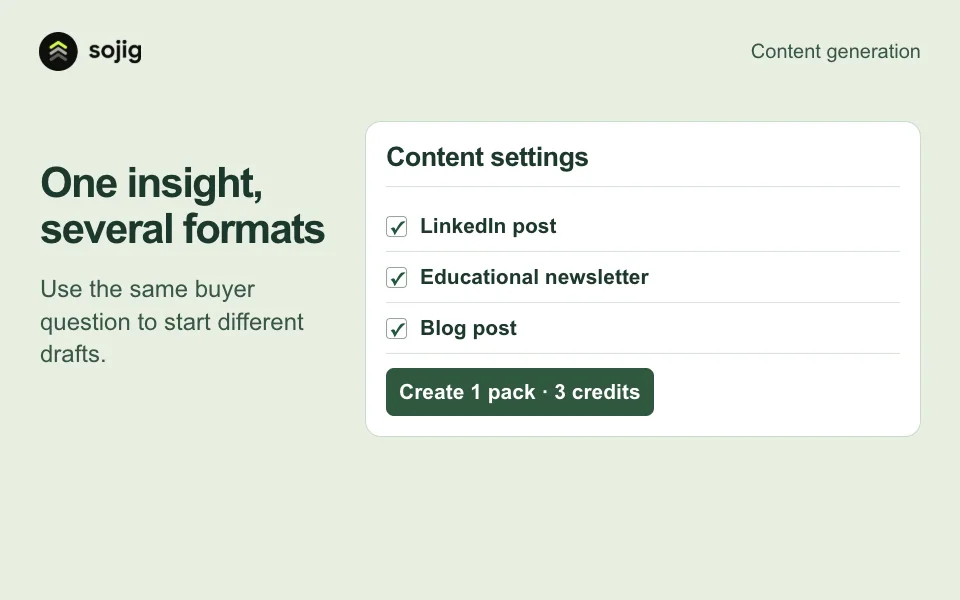
Match the objection to a useful asset
- Implementation effort: Write an onboarding checklist with prerequisites, owners and decision points.
- Compatibility: Publish an integration FAQ with supported settings and links to documentation.
- Budget: Explain the cost drivers with an example that clearly states the assumptions.
- Internal adoption: Share a pilot plan the buyer can use with coworkers.
Prioritize one question for your next publishing cycle
Pick an objection you saw in several recent calls, can answer with approved sources and can address in one useful asset. Give your salesperson the published link and ask whether it helps with a real follow-up. Capture any new question that comes back and treat it as input for the next cycle.
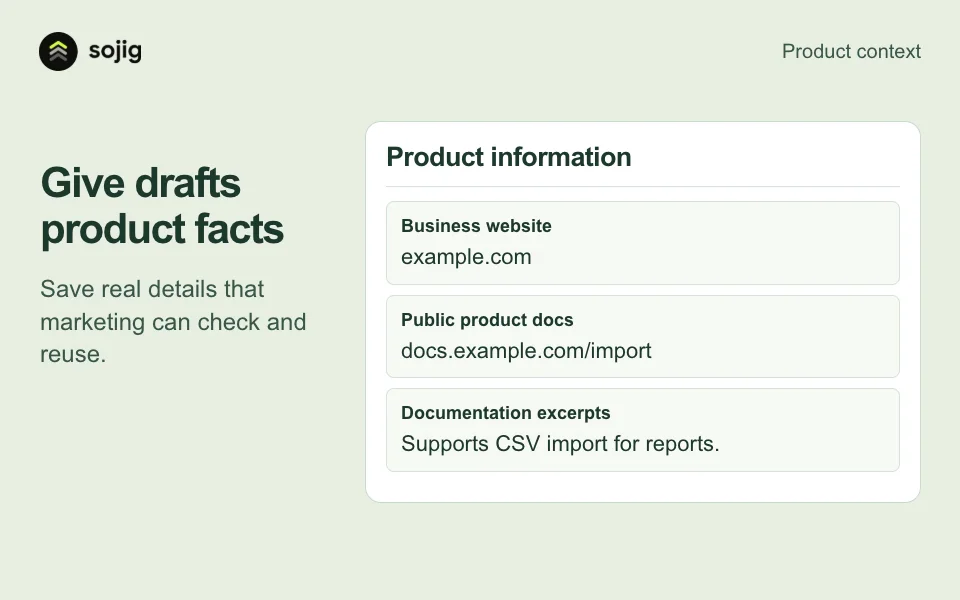
Use the sales battlecard template for concerns reps need to address during a call. For a recurring weekly process, use this sales call content workflow. In Sojig, save your approved product information so your team can reuse it when drafting.