Choose the format based on what the buyer needs next
Keep the buyer’s stage in your notes. A first-call objection may work as a short post, while a buyer preparing a pilot probably needs a checklist. The examples below are illustrative starting points.
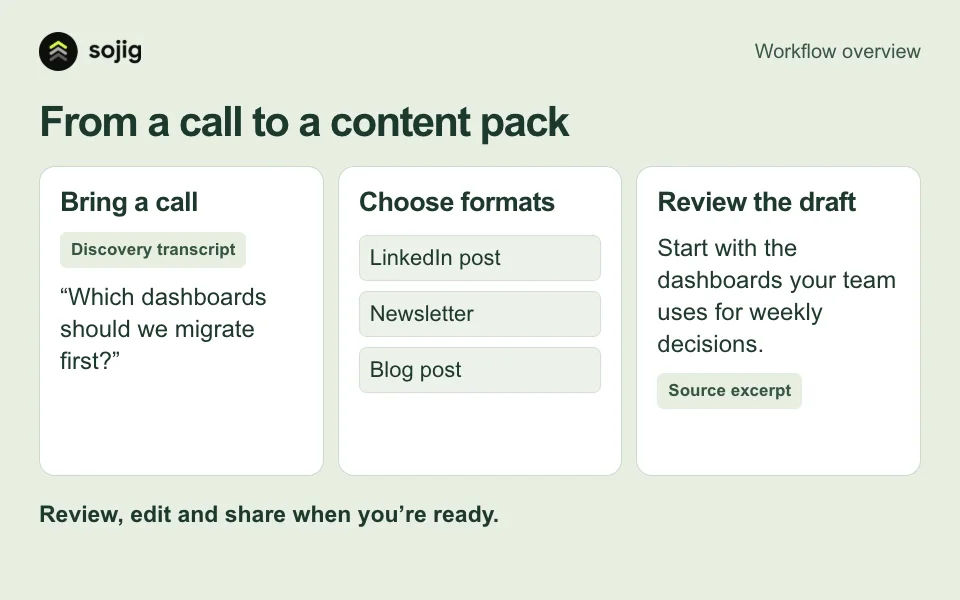
- LinkedIn post: A surprising objection becomes one opinion and a practical response.
- FAQ: A repeated “Does it connect to X?” becomes a short answer with verified integration details. Try the free demo transcript to FAQ tool.
- Blog how-to: An implementation question becomes a step-by-step guide.
- Newsletter: A tradeoff spotted during a demo becomes a short takeaway and a test readers can try.
- Comparison guide: A buyer weighing two approaches gets criteria, limitations and a decision table.
- Sales follow-up email: An unresolved concern becomes a concise answer with the source or next action.
- Pilot checklist: A question about rollout risk becomes owners, prerequisites and acceptance criteria.
- Ad copy angle: A recurring pain point provides phrasing for a headline. Verify any benefit or outcome before making it an ad claim.
- Video script: An explanation that repeatedly works on calls becomes a short, demonstrable lesson.
- Case study outline: An approved customer conversation can suggest which results to verify. Start a case study outline from a discovery call and use it to plan a follow-up interview.
A fast way to choose between formats
Ask whether the reader needs an answer, a procedure or proof. Put a simple integration question in a FAQ; explain a migration decision in a blog; use an outcome as a case study only after it’s verified and cleared for publication.
Start with one strong question and two formats with different jobs. For example, pair an implementation checklist with a newsletter that explains when to use it. See the transcript-to-content workflow.