Review AI drafts against two sources
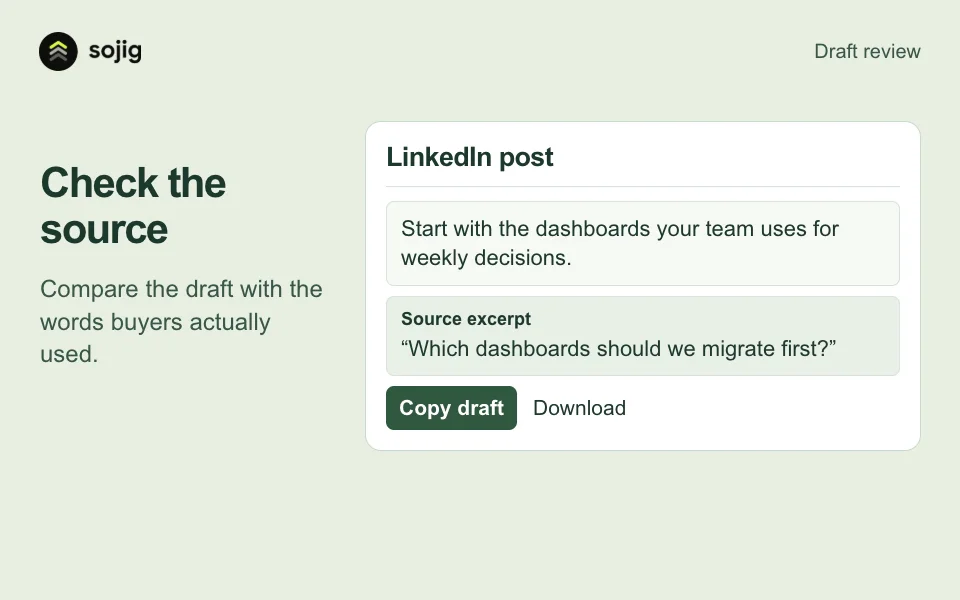
Compare the draft with the transcript for what the buyer said and with current documentation for what your product does. Have an assigned person approve changes before publishing. A transcript can support an observation about buyer concerns, while a product source can support a feature claim.
An approval checklist for marketing
- Context: Read the sentence before and after the excerpt. Check that the draft preserves qualifications or uncertainty.
- Attribution: Compare direct quotes with the original text. Get explicit approval before using names, verbatim endorsements or identifying details.
- Accuracy: Verify plan limits, prices, availability and integration details in current documents.
- Confidentiality: Remove company-specific metrics, pipeline details and sensitive implementation context that the public reader doesn’t need.
- Destination: Check length, image requirements and community rules. Preview the final text in its destination format.
Example: Turn an implied promise into a verifiable answer
A buyer asks, “Can our whole team onboard in a day?” A draft says, “Every team is up and running in a day.” The question provides an editorial angle, and the draft adds a claim that requires evidence. Replace the promise with an approved checklist of setup steps and describe any dependencies your documentation confirms.
Record the approver and the source for any claim that may change. Sojig’s draft review and library keep drafts and excerpts accessible, and social publishing gives you a preview before you confirm a post.